
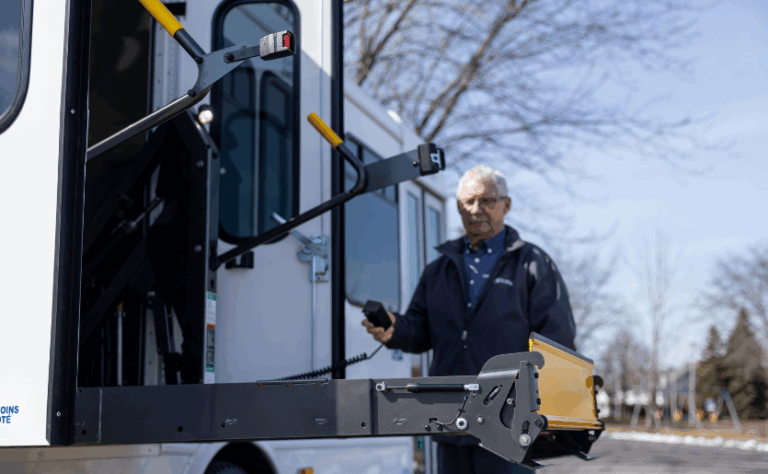
Keeping your bus or paratransit wheelchair lift in top shape is non-negotiable for safety, uptime, and compliance. Here’s a short, practical checklist based on OEM guidance for Century 2 (NCL series) public-use lifts.
Why it matters
- Prevent unexpected downtime and costly repairs
- Protect riders and operators with a smooth, predictable lift cycle
- Meet inspection expectations and extend service life

Maintenance intervals (by cycle count)
- Every 750 cycles: General inspection and lubrication; check Lift-Tite™ latches, dampening gas springs, snap rings, and overall operation. Replace or correct any worn/damaged parts.
- Every 1,500 cycles: Repeat 750-cycle tasks plus inspect the inner roll stop (wear, damage, proper operation) and its springs. Correct/replace as needed; address any rattles or loose hardware.
- Every 4,500 cycles: Repeat prior tasks; inspect all gas springs (cylinders) and external snap rings across specified locations; tighten or replace as required. Continue at consecutive 750-cycle intervals thereafter.
- Cycle counter: Many NCL-2 lifts include a built-in cycle counter—use it to plan servicing.
- Authorized service required: Maintenance and lubrication must be performed by an authorized service technician.
Quick inspection focus areas
- Latches & gas springs: Verify smooth latch engagement and proper dampening; replace any weak or damaged gas springs.
- Inner roll stop: Confirm it locks/raises correctly and shows no deformation or excessive wear.
- Snap rings & fasteners: Ensure snap rings are seated; tighten or replace loose/stripped hardware.
- Noise & play: Investigate rattles; they often signal misadjustment or wear.
- Contaminants: If the platform sees mud, road salt, or wash-bay overspray, increase cleaning and re-lubrication frequency.

Pro tips for uptime
Log cycles weekly to avoid missed milestones.
- Clean, then lube: Dirt traps grit—wipe before lubricating.
- Document everything: Keep a dated checklist with parts replaced and torque checks.
A consistent wheelchair lift maintenance routine keeps riders safe, vehicles compliant, and fleets on schedule. Follow the cycle-based checks, document each service, and address wear early to prevent costly downtime. For a simple, printable checklist your technicians can use, I can format one for your fleet.