

There’s nothing worse than having your bus heater shut down in the middle of winter while transporting passengers. The stress it puts on the driver and the frustration it causes for passengers creates an unpleasant experience for everyone on board.
A dependable heating system is critical for driver comfort, passenger safety, and overall fleet reliability, especially in colder climates. Yet heating performance is often affected by more than just the heater core itself. The power supply, control circuits, and cooling system all play interconnected roles in delivering consistent heat throughout the year. By understanding these components and performing regular inspections, operators can prevent costly failures and ensure dependable performance in every season.
Bus heating system power & control circuits
In most commercial buses, the heater’s power supply and control circuits are located in the electrical compartment above the driver. This centralized location improves wiring efficiency, diagnostics, and maintenance access.
Typical components include:
• Heater relays
• Fuses and circuit breakers
• Blower motor power feeds
• Temperature and fan control wiring

These components regulate heater performance, so corrosion, loose wiring, or blown fuses can immediately reduce heat output. Keeping this compartment clean, dry, and inspected regularly helps prevent electrical failures and downtime.
Why the cooling system affects bus heating performance
Bus heaters rely on engine coolant to generate warm air. Hot coolant flows through the heater core, and the blower pushes heat into the passenger compartment.
Low coolant levels, damaged hoses, or air in the system will:
• Reduce heater efficiency
• Weaken the airflow temperature.
• Cause the cabin heat is inconsistent.
Monitoring the cooling system is essential for both engine protection and reliable passenger heating.
Weekly cooling system inspection checklist
A simple weekly inspection helps prevent unexpected heating failures
1. Check Coolant Level
Inspect only when the engine is cool. Low coolant is one of the most common causes of poor heater performance.
2. Inspect Coolant Condition
Coolant should be clean and properly mixed. Rust, cloudiness, oil, or contamination may indicate the need for a flush.
3. Inspect Hoses and Clamps
Look for cracks, swelling, dry rot, or loose clamps. Leaks reduce coolant volume and introduce air into the system.
4. Check for Leaks
Inspect under the bus, at the hose connections, and near the heater core. Even small leaks can cause major heating issues over time.
Additional heater components to monitor
• Heater core flow: Sediment can restrict coolant circulation
• Heater control valves: Must open and close properly
• Blower motors: Ensure strong airflow and quiet operation
• Electrical connections: Watch for corrosion or loose terminals
Regular monitoring ensures consistent heat in all weather conditions.
Prevent major issues with a simple routine
Regular monitoring ensures consistent heat in all weather conditions.
A well-functioning heating system is the result of routine attention, not chance. By performing weekly cooling system checks, keeping the electrical compartment clean, and monitoring key components, fleets can protect their vehicles from unexpected downtime and ensure passenger comfort during every trip.
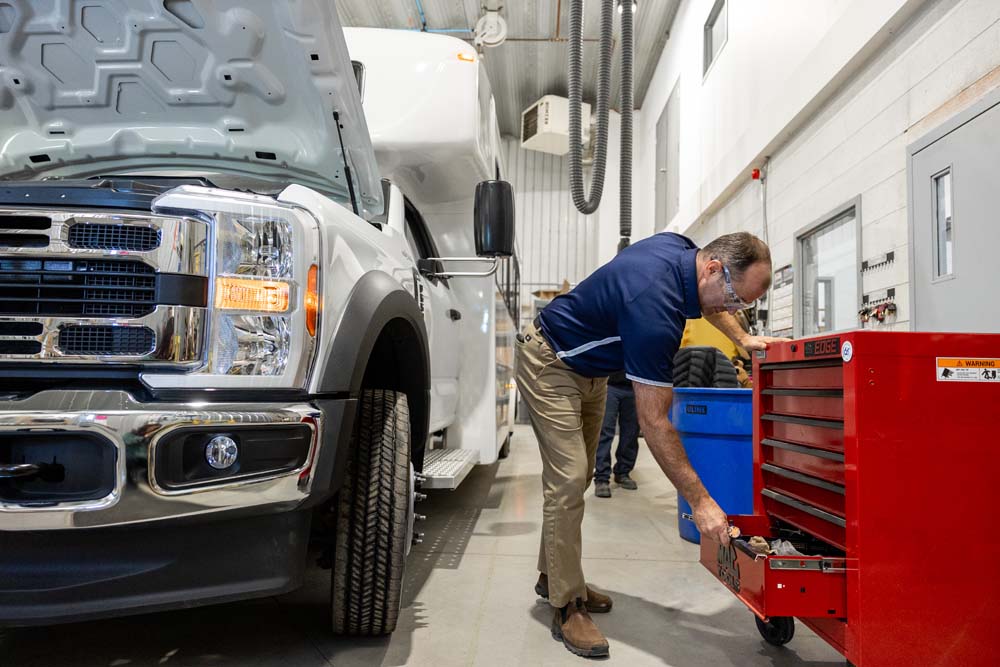
Investing just a few minutes per week in preventive maintenance can save hours of repairs and keep buses operating safely and reliably all year long.
Is your bus due for an inspection?